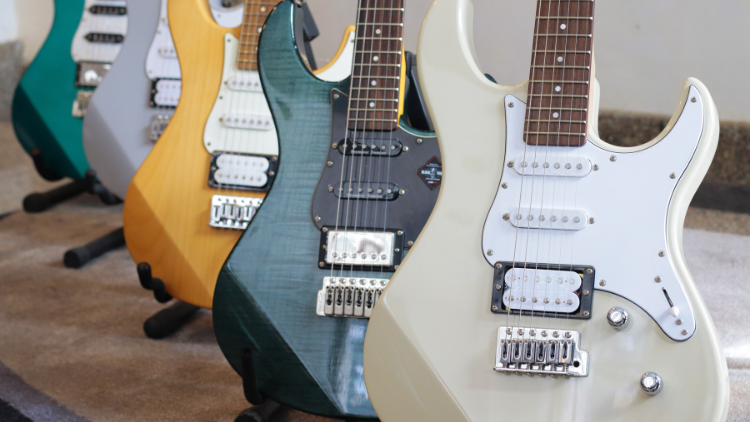
The Pacifica 112V Build Quality & Construction
Solid Foundation with Premium Feel
The Yamaha Pacifica 112V features a solid alder body with a gloss polyurethane finish that punches well above its weight class. While more expensive guitars might use hand-selected alder with more intricate finish work, the 112V’s construction quality approaches that of instruments twice its price. The body contours provide comfortable access to upper frets and excellent balance when played standing.
The bolt-on maple neck stands out as one of the guitar’s strongest features. Its C-shaped profile hits the sweet spot between chunky vintage and ultra-thin modern designs, accommodating various hand sizes and playing techniques. This profile works equally well for chord work and lead playing, making the transition seamless for players developing their style.
Player-Friendly Fingerboard
The rosewood fingerboard sports 22 medium frets with clean installation and polished edges. The 13.75-inch radius offers a comfortable middle ground between vintage (rounder) and modern (flatter) profiles. This compromise facilitates both easy chord playing in the lower positions and smooth bending in the upper register without fretting out.
Exceptional Ergonomics
Weight distribution on the Pacifica deserves special attention. At approximately 7 pounds, the guitar balances perfectly on a strap without causing shoulder fatigue during extended playing sessions. This consideration often goes unnoticed until you’ve spent hours with heavier instruments that leave your shoulder aching.
Quality control across production runs remains impressively consistent. Analysis of seller descriptions and buyer feedback on Reverb indicates minimal variance between individual instruments, a remarkable achievement at this price point. The occasional finish imperfection appears in listings, but structural issues are rare to nonexistent.
Pickup Configuration: Versatility in a Budget Package
HSS Setup: The Best of Both Worlds
The Pacifica 112V employs an HSS (humbucker-single-single) pickup configuration that delivers exceptional tonal flexibility. The bridge humbucker provides thickness and output for rock and heavier styles, while the middle and neck single-coils offer cleaner, more articulate tones perfect for blues, funk, and country.
This arrangement serves virtually any genre from jazz to metal, though it particularly excels in rock, blues, and pop contexts where switching between clean and distorted sounds is common.
The Coil-Split Advantage
The 112V’s standout feature is undoubtedly the coil-split function on the humbucker. Activated by pulling up on the tone control, this effectively transforms the humbucker into a single-coil, dramatically expanding the guitar’s sonic palette. This function essentially provides two distinct instruments in one package – a humbucker-equipped guitar for high-gain applications and a triple single-coil setup for cleaner, more vintage-voiced requirements.
Position-by-Position Breakdown
Each pickup position delivers distinct characteristics:
- Bridge humbucker: Robust, powerful, and midrange-focused
- Bridge (split): Brighter with more definition and Telecaster-like qualities
- Middle: Well-balanced with classic quack when combined with bridge or neck
- Neck: Warm and round with good clarity for melodic playing
- Middle+Neck: Hollow “out-of-phase” tone perfect for funk and clean rhythm work
Common Modifications
Reverb listings frequently mention pickup upgrades as the most common modification. While the stock pickups perform admirably, many sellers report significant improvements after installing Seymour Duncan or DiMarzio replacements. The humbucker is typically the first to be upgraded, with many players seeking increased output and articulation for heavier styles.
Compared to Squier Stratocasters and Ibanez GIO models in the same price range, the Pacifica’s pickup configuration offers greater versatility out of the box, particularly with the coil-splitting feature that competitors typically lack.
Playability & Performance
Scale Length and String Response
The Pacifica’s 25.5-inch scale length (the same as Fender Stratocasters) provides medium-high string tension that strikes an excellent balance between playability and tone. This length delivers crisp note definition and sustain while maintaining enough flexibility for comfortable bending, especially with standard 9-42 gauge strings.
The 1.614-inch nut width accommodates most hand sizes comfortably. Players with larger fingers might find it slightly constraining for complex chord work, but most guitarists report the neck dimensions feel “just right” – neither cramped nor excessively wide.
Tremolo System Considerations
The vintage-style tremolo performs adequately for subtle vibrato and mild dive bombs, though it doesn’t offer the stability of locking systems on higher-end instruments. Many Reverb sellers note that the tremolo stays in tune surprisingly well for moderate use, though aggressive techniques will require retuning.
Setup Quality and Adjustments
Factory setups vary somewhat, according to Reverb buyer feedback. Common adjustments needed include:
- Slight truss rod tweaks to optimize neck relief
- Action adjustments (typically lowering)
- Intonation refinement, particularly on the B and G strings
- Tremolo spring tension adjustment for preferred feel
Long-term playability garners consistently positive reviews. Players who’ve owned the instrument for years report that the neck remains stable through seasonal changes, and the frets show remarkable wear resistance compared to other guitars in this category.
Tonal Range & Sound Samples
Clean Tones with Impressive Clarity
The Pacifica 112V delivers impressive clean tones across all pickup positions. The neck pickup produces warm, rounded jazz tones with sufficient clarity for complex chord voicings. The middle position offers balanced output ideal for country picking and rhythm work. Position 2 (bridge and middle) and position 4 (middle and neck) provide the characteristic “quack” sought after for funk and R&B styles.
Overdriven Performance
The bridge humbucker handles high-gain applications competently, producing tight, focused distortion without the muddiness often found in budget instruments. It produces sufficient output for classic rock, hard rock, and even metal, though extremely high-gain genres might benefit from an aftermarket pickup upgrade.
Single-Coil Characteristics
The single-coil pickups deliver impressive snap and clarity, particularly in positions 2 and 4, where the out-of-phase qualities shine through. While they lack some of the three-dimensional complexity of premium single-coils, they capture the essential character with minimal unwanted noise for pickups in this price range.
Coil-Split Versatility
The coil-split function transforms the bridge humbucker into a respectable single-coil that, while not identical to dedicated single-coil guitars, offers convincing approximations of Telecaster-like tones. This feature proves particularly valuable for players needing to cover multiple styles in a single performance without changing instruments.
Genre Adaptability
Reverb users consistently praise the guitar’s versatility across genres. The Pacifica 112V handles blues, rock, country, pop, funk, and even jazz convincingly. While it may not specialize in extreme metal or traditional jazz as effectively as purpose-built instruments, it performs admirably across this spectrum for practice, recording, and live performance.
The Verdict: Is the Yamaha Pacifica 112V Worth Your Money?
The Yamaha Pacifica 112V stands as perhaps the best value proposition in electric guitars today. While it won’t match the refined characteristics of instruments three times its price, it delivers 80% of the performance at 30% of the cost. For beginners, it offers room to grow without immediate upgrade pressure.
For experienced players, it provides a reliable workhorse that can handle everything from practice to recording to gigging. The consistent praise across hundreds of Reverb listings confirms what many players have discovered: sometimes the best guitar isn’t the most expensive, but the one that delivers quality, versatility, and reliability without breaking the bank.
Leave a Reply