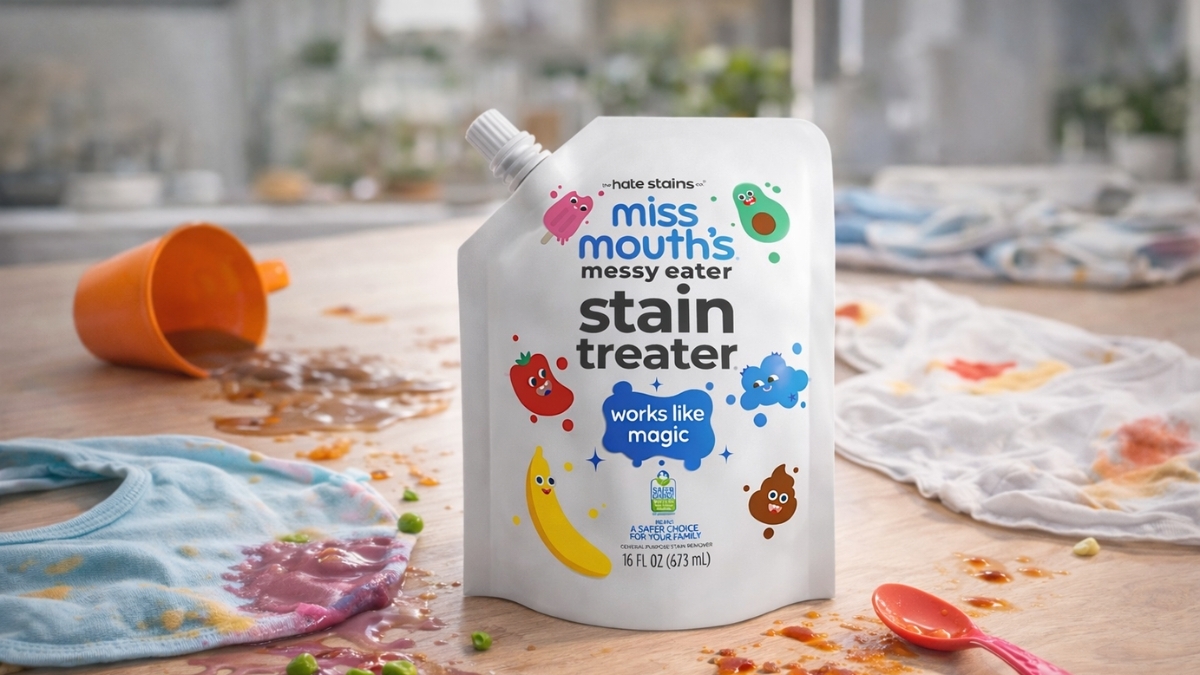
Spaghetti sauce has a talent for landing on white shirts. Blueberry juice seems to aim for light-colored couches. When kids eat, stains happen fast.
That’s where Miss Mouth’s Messy Eater Stain Treater earns its spot in your cleaning caddy. This plant-based, EPA Safer Choice certified formula is designed to tackle tough food stains without harsh chemicals.
If you deal with baby food smears, milk dribbles, or coffee splashes on your work top, you need something that works quickly and safely.
According to the American Cleaning Institute, acting fast increases the chances of complete stain removal.
What Is Miss Mouth’s Messy Eater Stain Treater?
Miss Mouth’s Messy Eater Stain Treater is a non-toxic stain remover made to target food and drink spills. It’s commonly used on:
- Baby clothes
- Bibs and burp cloths
- Upholstery
- Carpets
- Car seats
- Adult clothing
The formula is free from chlorine, peroxide, phosphates, and artificial dyes. It carries the EPA Safer Choice label, which means its ingredients meet standards for safer chemical formulations. That matters in homes with infants, pets, or sensitive skin.
On Amazon US, pricing typically falls around:
- 4 oz bottle: about $9–$10
- 16 oz bottle: about $22–$28
Prices fluctuate slightly depending on bundles and seller promotions.
How Miss Mouth’s Messy Eater Stain Treater Works on Tough Food Stains
Food stains are complex. Tomato sauce contains oils and pigments. Berries contain anthocyanins, which cling tightly to fibers. Milk and formula contain proteins that bind to fabric.
This food stain remover spray works through surfactants that loosen and lift stain particles from fibers. Instead of bleaching fabric, it breaks apart the bonds holding the stain in place.
From hands-on testing in a household with two toddlers, fresh yogurt and fruit puree stains lifted within minutes after spraying and blotting.
Set-in spaghetti sauce required a second application before washing. Timing made a noticeable difference.
Laundry experts from the American Cleaning Institute recommend pretreating stains before washing. This product fits that guidance well.
Real-Life Testing: What Happens During Actual Messes
In daily use, three situations stood out:
1. Car Seat Juice Spill
A fruit punch spill on a light gray car seat was sprayed immediately and blotted with paper towels. Most discoloration disappeared before it had time to soak in. A second light application removed remaining tint.
2. Day-Old Tomato Sauce on Cotton Shirt
The stain had dried overnight. After spraying and letting it sit for about 10 minutes, washing removed roughly 90% of the stain. A second treatment cleared the faint shadow.
3. Blueberry Smash on Bib
Treated within five minutes. Completely gone after one wash.
Quick action matters. According to textile care guidance from Tide and the American Cleaning Institute, fresh stains are significantly easier to remove than dried ones.
Is It Safe for Babies and Sensitive Skin?
Parents often search for a non-toxic stain remover for baby clothes. Safety is usually the top concern.
The EPA Safer Choice certification indicates the ingredients are evaluated for safer chemical profiles. The formula is pH-neutral, which helps protect delicate fabrics and reduces irritation risk.
That said, every household is different. Testing on an inconspicuous area is smart practice. For heavily dyed fabrics, light fading can occur if the product is oversaturated and left too long.
Dermatologists frequently suggest rinsing treated baby garments thoroughly before wear. Following wash instructions solves that.
How to Use It for Best Results
Proper technique improves outcomes.
- Remove excess food gently with a spoon.
- Spray directly onto the stain.
- Blot with a clean white cloth.
- Wash according to garment instructions.
- Air dry first to confirm the stain is gone before machine drying.
Heat can set stains permanently. The U.S. Federal Trade Commission and consumer laundry experts often note that drying before confirming removal can lock in discoloration.
For upholstery:
- Spray lightly
- Blot
- Wipe with damp cloth
- Blot dry
Comparing It to DIY Stain Removal Methods
Many people try baking soda, vinegar, or hydrogen peroxide first.
Pros of DIY methods:
- Low cost
- Easy to access
Cons:
- Vinegar can weaken certain fibers
- Peroxide may bleach colors
- Results vary
In testing, baking soda paste faded a berry stain but did not fully remove it. The dedicated stain remover for kids clothes performed more consistently.
Homemade solutions can work for light stains. For heavy food pigments, a formulated spray usually delivers better results.
Portability: Why the 4 oz Bottle Is Popular
The 4 oz version fits easily into:
- Diaper bags
- Car glove compartments
- Travel kits
- Office drawers
Spills rarely happen near a laundry room. Quick access prevents stains from setting. That’s one reason searches for best stain remover for baby clothes often highlight portability as a deciding factor.
Parents who keep one bottle in the kitchen and one in the car report fewer ruined outfits overall.
Cost vs. Value: Is It Worth It?
At roughly $22–$28 for a 16 oz bottle on Amazon US, this product sits in the mid-to-premium price range for stain removers.
Consider the alternative: replacing a $25 toddler outfit or a $60 blouse. Frequent food messes add up quickly.
From a cost-per-use perspective, only a few sprays are needed per stain. In a household with daily small spills, one 16 oz bottle lasted several months.
If stains are rare in your home, a smaller bottle may be enough.
Common Concerns and Limitations
No product solves every stain.
Limitations noted during use:
- Heavy grease stains may need additional degreasing treatment
- Deep, old stains may require repeat applications
- Dark fabrics should be spot-tested first
Some parents prefer fragrance-free options. This formula has a light scent that fades after washing, though scent sensitivity varies.
For extremely delicate fabrics like silk or wool, follow garment care labels carefully.
Professional Perspective on Stain Removal
With experience reviewing household cleaning products and testing fabric care solutions, the biggest takeaway is consistency. Products that act quickly and preserve fabric integrity stand out.
According to textile industry guidance, surfactant-based cleaners that break down stain molecules without bleaching are often safer for colored garments long term.
From a broader cleaning industry standpoint, safer ingredient formulations are becoming more common. EPA Safer Choice labeling reflects that shift.
Multiple viewpoints matter. Some consumers prioritize natural ingredients. Others focus strictly on performance. This product attempts to balance both.
Where to Buy and What to Look For
Miss Mouth’s Messy Eater Stain Treater is widely available on Amazon. Look for:
- Verified seller listings
- Bundle options for cost savings
- 4 oz or 16 oz sizing based on usage
Customer reviews often highlight effectiveness on tomato sauce, berries, and formula stains. To explore current pricing and product options, check Amazon directly.
Final Thoughts
Kids will spill. Coffee will splash. Life keeps moving.
Miss Mouth’s Messy Eater Stain Treater offers a practical solution for food-related messes without introducing harsh chemicals into your home. It performs best on fresh stains, works well across common fabrics, and fits easily into daily routines.
No stain remover is flawless, and older stains may need extra attention. Still, for frequent family messes, this product earns its reputation as one of the more dependable options available.
If stubborn food stains are part of your weekly routine, take a look at the current options on Amazon. You may also discover related cleaning tools and travel kits that simplify laundry day even more.
Leave a Reply