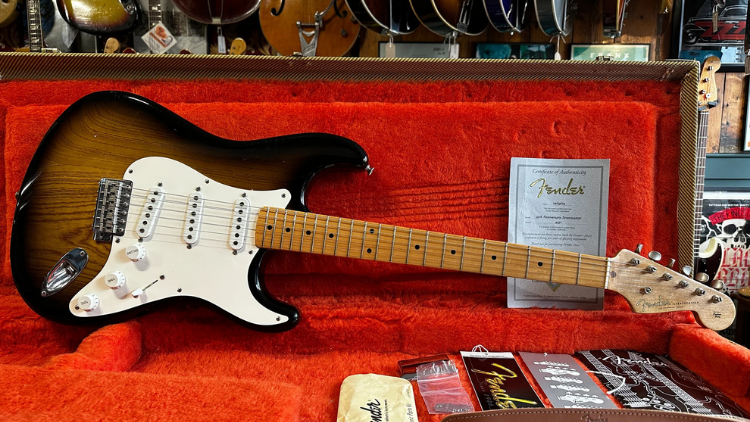
The Fender Stratocaster is more than an instrument—it’s a cultural landmark that has defined the sound of modern music for nearly seven decades. When Leo Fender introduced this innovative double-cutaway design in 1954, he set a new standard for both comfort and playability that continues to influence guitar design today. The Strat’s contoured body, responsive tremolo system, and signature three-pickup configuration have made it one of the most versatile and recognizable guitars ever built.
Described by Fender as “a timeless classic,” the Stratocaster continues to evolve while remaining true to its heritage. Platforms like Reverb have made discovering the right Strat easier than ever, offering a vast selection that spans from affordable Player Series models to handcrafted Custom Shop masterpieces. Whether you’re drawn to its history, tone, or feel, understanding what distinguishes each variation will help you find the Stratocaster that truly resonates with your playing style and personality.
Understanding Stratocaster Models and Tiers
Player Series (Mexican-made)
The Player Series represents Fender’s entry point into professional-grade instruments while maintaining excellent value. These Mexican-manufactured Stratocasters deliver remarkable quality at their price point, featuring modern C-shaped necks, 22 frets, and Alnico 5 pickups. The Player Series replaced the previous Standard line in 2018, bringing upgraded components and refined manufacturing processes. Though more affordable than American-made models, these instruments remain highly respected performers on stage and in studios worldwide.
Vintera Series
For those seeking authentic vintage tones and aesthetics, the Vintera Series recreates specific eras of Stratocaster evolution. These models capture the essence of particular decades—’50s models feature maple fingerboards and vintage-tall frets, ’60s versions offer round-lam rosewood boards with a slimmer neck profile, while ’70s editions showcase large headstocks and U-shaped necks. Period-correct pickups, hardware, and finishes make these guitars particularly appealing to players seeking historically accurate instruments without vintage-instrument prices.
American Professional/Performer
The American Professional and Performer lines represent Fender’s mid-to-high-tier offerings manufactured in Corona, California. These instruments feature premium components including V-Mod pickups designed by Tim Shaw, improved tremolo systems, and enhanced manufacturing precision. The neck profiles typically offer a more refined playing experience, while the electronics deliver increased tonal versatility through thoughtful circuit designs. These models strike an excellent balance between tradition and innovation.
American Ultra/Original
At the premium end of standard production, American Ultra and Original series Stratocasters showcase Fender’s finest mass-produced craftsmanship. Ultra models feature compound-radius fingerboards, noiseless pickups, contoured heels, and S-1 switching systems. Original series guitars faithfully recreate specific years of Stratocaster production with period-correct specifications. Both lines represent significant investments, but deliver exceptional playability, tone, and craftsmanship.
Custom Shop
Handcrafted by master builders, Custom Shop Stratocasters represent the pinnacle of Fender quality. These instruments feature meticulous attention to detail, premium tonewoods, and often incorporate vintage techniques like hand-wound pickups and nitrocellulose finishes. Custom Shop offerings range from Team Built models to Master Built instruments crafted by individual luthiers. While commanding premium prices, these guitars offer unparalleled craftsmanship and often appreciate in value.
Artist Models
Signature Stratocasters replicate the specifications of famous players’ instruments. From Eric Clapton’s mid-boost circuit to Jeff Beck’s contoured heel and special pickups, these models allow players to access the exact tools used by their heroes. Artist models span various price points across different Fender production facilities, offering accessibility to different budget levels while maintaining the specific characteristics that define each artist’s sound.
The Anatomy of a Stratocaster: What Makes It Special
Body Design
The Stratocaster’s double-cutaway body with contoured edges revolutionized electric guitar ergonomics upon its 1954 introduction. Unlike the flat slab bodies common at the time, the Strat features a comfortable forearm contour and a ribcage cut on the back, allowing for extended playing sessions without discomfort. This body shape provides excellent upper fret access and balanced weight distribution. The design has proven so effective that it remains essentially unchanged after nearly seven decades.
Pickup Configuration
The standard Stratocaster features three single-coil pickups (SSS configuration), offering five distinct tonal options through its selector switch. The bridge pickup delivers bright, cutting tones; the middle provides balanced output; and the neck offers warmer sounds. The “in-between” positions (bridge+middle and middle+neck) create the distinctive “quack” that defines much of the Stratocaster sound. HSS variants replace the bridge pickup with a humbucker, providing thicker tones for heavier styles while maintaining classic Strat sounds in other positions.
Neck Profiles
Stratocaster neck profiles significantly impact playability and comfort. Traditional “V” shapes echo 1950s models, while various “C” profiles accommodate different hand sizes and playing styles. Modern C shapes offer a comfortable middle ground with medium depth and shoulder. Deep C profiles provide more substantial feel, while oval C shapes create a thinner, faster playing experience. Neck profile preference remains highly personal, with each shape offering distinct advantages depending on technique and hand anatomy.
Tremolo Systems
The Stratocaster’s synchronized tremolo system stands as one of Leo Fender’s most innovative designs, allowing for expressive pitch modulation. Vintage-style six-screw bridges faithfully recreate the original design, while two-point modern systems offer improved tuning stability and smoother operation. Both systems can be set up “floating” (allowing pitch raises and lowering) or “decked” against the body (only allowing downward pitch bending). The tremolo’s design affects sustain, resonance, and maintenance requirements.
Tonewoods
Body wood selection significantly influences a Stratocaster’s voice. Traditional alder bodies provide balanced frequency response with slightly scooped mids. Ash bodies (particularly swamp ash) deliver enhanced resonance with pronounced highs and lows. Fingerboard materials further shape tone—maple fingerboards emphasize attack and brightness, while rosewood adds warmth and roundness. Premium models may feature select grades of these woods or sometimes exotic alternatives like roasted maple, which offers enhanced stability and vintage-like tonal characteristics.
Hardware Quality
The quality of a Stratocaster’s hardware components varies dramatically across price points. Entry-level models utilize adequate but basic die-cast tuners and standard tremolo components. Mid-tier instruments feature improved materials like staggered-height tuning machines and cold-rolled steel tremolo blocks. Premium Stratocasters often incorporate locking tuners, machined steel tremolo blocks, and premium-quality potentiometers and switches. These components affect tuning stability, sustain, and long-term reliability.
Buyer’s Decision Guide
The Fender Stratocaster continues to define what versatility in an electric guitar truly means, offering models that cater to nearly every style, genre, and budget. Whether you favor the classic SSS configuration responsible for countless legendary recordings or the modern flexibility of an HSS setup with noiseless pickups, platforms like Reverb provide access to an unparalleled global selection of Stratocasters for every player.
It’s important to remember that each guitar— even among identical models—has its own distinct personality. Whenever possible, compare multiple instruments and ask sellers detailed questions about neck profile, setup, and electronics condition. Specifications tell part of the story, but the perfect Stratocaster is ultimately the one that feels right and inspires creativity the moment you play it.
Owning a Stratocaster marks the beginning of a personal journey, not the end. As you explore its tonal range and make it uniquely yours, you’ll discover why this iconic design has remained a cornerstone of modern music for more than seven decades.
Leave a Reply