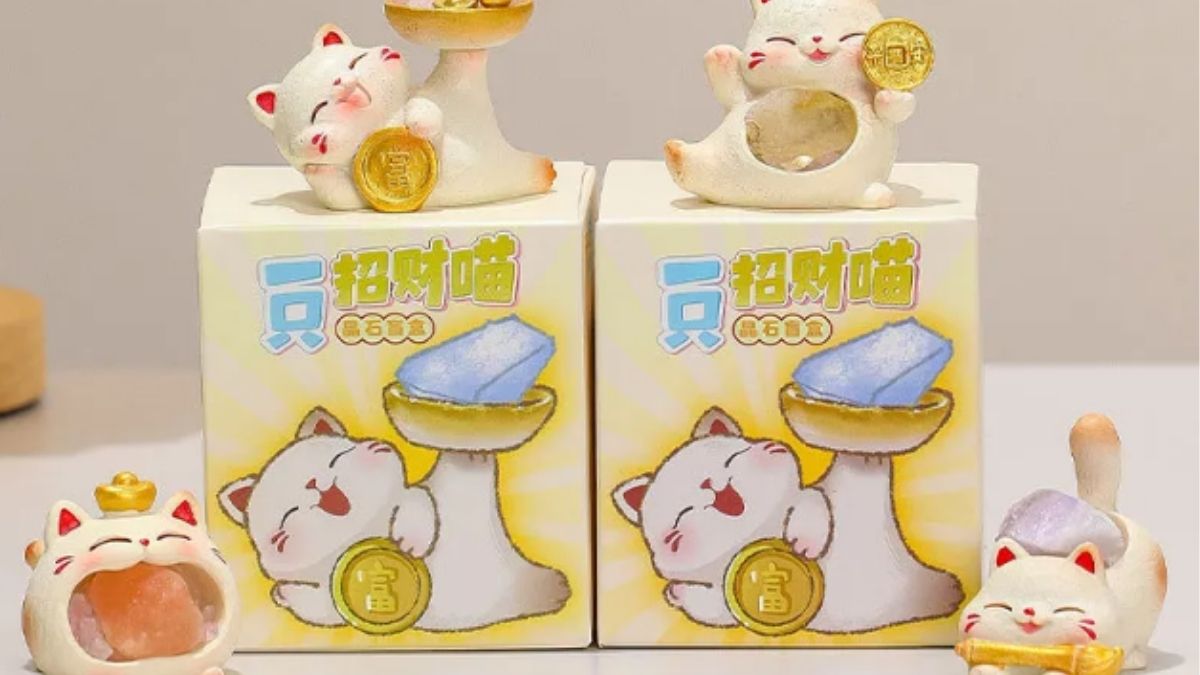
Blind boxes aren’t just a passing trend anymore. The global blind box toy market has grown fast in recent years and is expected to keep expanding through the next decade, showing sustained collector demand rather than short hype.
At the same time, lucky cat (maneki-neko) figures remain a popular good-fortune symbol across Japan and much of Asia, often placed in homes or shops to “invite” prosperity.
Weenybirdie fuses those two worlds—cultural charm plus a modern collectible format.
What you’re actually getting in the blind box
Each box contains one randomly selected Lucky Cat resin crystal holder. The figure is small (about 5 cm tall), with a shallow cradle area designed to hold a tiny crystal, stone, or charm.
Key physical details you should expect:
- Material: painted resin with a glossy or satin finish
- Size: roughly 5 cm × 5.5 cm × 5 cm, so it fits on a desk or shelf without needing special space
- Function: decorative figure + mini crystal holder
- Packaging: compact, designed to protect the resin during shipping and maximize the surprise factor
Because the design is random, buying more than one is the only way to increase your odds of getting a specific variant.
Why collectors like this series
From a collector’s point of view, there are a few clear draws.
First, the sculpt is doing more than just being cute. The holder function means you’re not stuck figuring out what to do with another small figurine. It becomes part of a crystal corner, altar, or display lineup.
Second, blind-box mechanics create built-in excitement. You’re paying for a small object and the unboxing moment. That emotional spike is a big reason blind boxes keep growing worldwide.
Third, lucky cat designs are naturally “collect-all-the-colors” friendly. In maneki-neko tradition, colors often imply different wishes—like prosperity, protection, or happiness—so color variants feel meaningful instead of arbitrary.
How to use your Lucky Cat crystal holder (without overthinking it)
You don’t need to be a serious crystal practitioner to enjoy these. Most people use them in simple, aesthetic ways:
- Mini crystal display: place a small polished stone or chip cluster in the holder
- Desk “good vibes” piece: pair it with a crystal you associate with focus or calm
- Shelf accent: group several cats together for a colorful lineup
- Giftable surprise: the blind format makes gifting more playful
If you’re into mindfulness or spiritual routines, you might place a crystal that matches your intention. If you’re not, it still works as a cute micro-display.
Caring for resin so it stays clean and collectible
Resin is durable enough for display, but it’s not indestructible. A little care keeps it looking sharp:
- Keep it out of harsh, direct sunlight to reduce fading over time.
- Dust with a soft dry cloth; skip chemical cleaners.
- Use only lightweight stones so the holder area doesn’t stress or chip.
- Avoid dropping it—resin can crack on hard impact.
If you’re collecting seriously, a small enclosed shelf or acrylic case helps preserve paint and reduces dust buildup.
A balanced take: what might not be for you
Since you’re buying blind, there’s a real trade-off. You might pull duplicates, or never get the color you want without trading.
Also, because the figure is tiny, it works best with small crystals. If you like large palm stones or chunky clusters, this holder won’t be practical.
Finally, limited-run collectibles sometimes spike in resale value, but that’s never guaranteed. Markets shift, and rarity alone doesn’t always equal long-term demand. Think of that as a possible bonus, not the core reason to collect.
Building a set and joining the community
If you decide to collect, you’ll probably end up doing what most blind-box fans do: trade. Online groups often swap duplicates so people can complete sets without endlessly re-buying.
A nice side effect is that collecting becomes social. You’re not just stacking figures—you’re sharing pulls, display ideas, and variant hunts with other collectors.
Leave a Reply