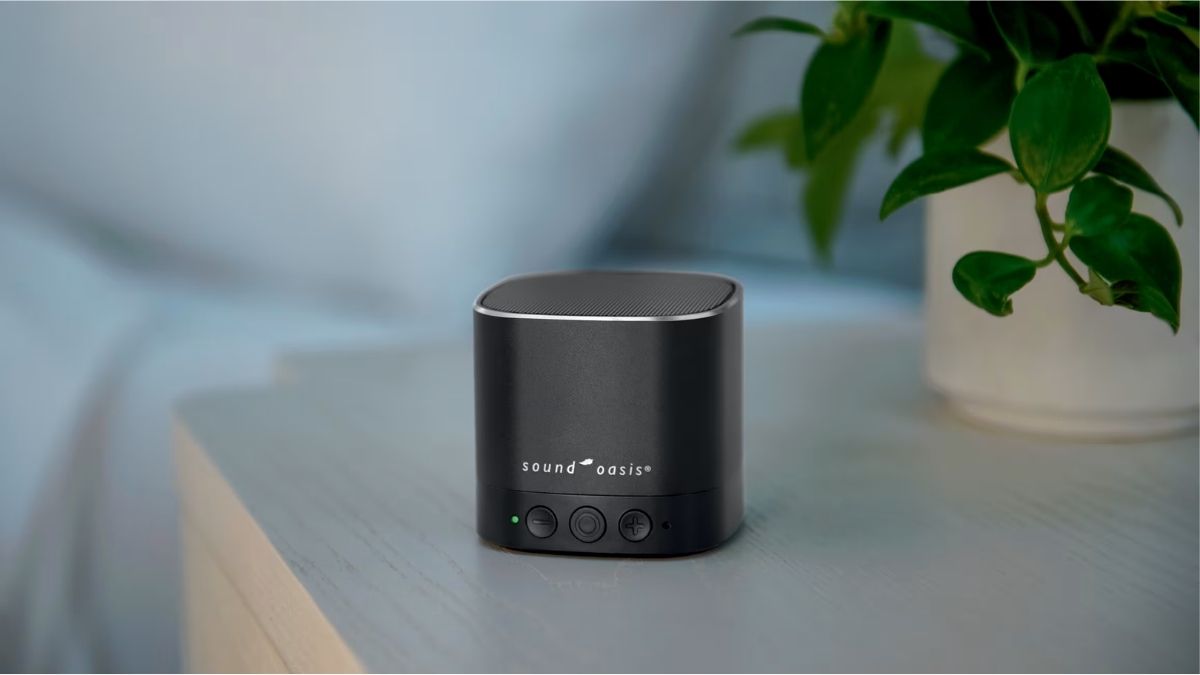
Sudden noise can wreck sleep. A bark, horn, or roommate moving around can snap the brain back to alertness. Sound therapy machines tackle this by filling the room with steady audio so interruptions fade into the background.
Sleep Number’s Sleep Sound Therapy System is a dedicated sound machine that pairs curated sleep tracks with Bluetooth playback in a travel-friendly body. Here’s what matters most.
What the system is
This device creates a consistent acoustic environment aimed at helping you fall asleep faster and stay asleep longer.
Its main mechanism is masking: steady sound lowers the contrast of disruptive noises. It supports good sleep hygiene, but it isn’t a treatment for medical sleep disorders.
Key features and specs
- Compact, lightweight design for bedside or travel use.
- 20 pre-loaded soundscapes on a micro-SD card.
- Rechargeable battery for about 4–5 hours of cordless play.
- USB power for continuous overnight use.
- Bluetooth speaker mode to stream audio from your phone.
- Simple on-device controls for volume and track changes.
Sound options and benefits
The library covers three proven categories:
- White noise: Even sound across frequencies. Great for masking traffic, voices, and sharp bursts.
- Pink noise: Deeper and softer than white noise. Many sleepers find it less harsh.
- Nature ambience: Rain, ocean, and forest-style loops that encourage relaxation.
Bluetooth adds flexibility. If the built-ins aren’t your style, you can stream guided meditations or any sound you prefer.
Who benefits most
This system fits people whose sleep is disrupted by environment or routine.
- Light sleepers who wake easily.
- City residents facing unpredictable outdoor noise.
- Shift workers sleeping during daytime activity.
- Frequent travelers who want a familiar sleep cue.
- People sharing a room with a snorer or different schedule.
- Anxious sleepers who settle better with gentle sound.
If noise sensitivity is your main issue, sound masking can be a high-impact change.
How to use it effectively
- Place it 3–10 feet from the bed so sound spreads evenly.
- Try one track for several nights before switching. Your brain adapts through repetition.
- Set volume just high enough to mask without becoming distracting.
- Start it 20–30 minutes before sleep to reinforce a routine.
- Charge before travel if you plan to use battery mode.
Expect a short tuning period to find your ideal sound and level.
Limitations and considerations
| Consideration | What it means |
| Battery life | Cordless use may not last all night. Plug-in mode fixes this. |
| Personal preference | Not every sound works for every person. |
| Medical scope | Doesn’t treat apnea or chronic insomnia. |
| Digital audio | Some still prefer fan-based noise. |
How it compares
Versus basic sound machines: The added Bluetooth and battery make it more flexible for travel and personalization.
Versus phone apps: A standalone device avoids screens, notifications, and overnight battery drain. Its speaker is also better suited to low, steady masking.
Bottom line
The Sleep Number Sleep Sound Therapy System is a practical tool for sleepers dealing with noise, travel, or bedtime anxiety.
The pre-loaded library covers the main therapeutic sound types, and Bluetooth ensures you’re not limited to them. Battery life is the only real drawback for unplugged all-night use, but USB power handles that at home.
If a stable sound backdrop helps you relax, this system can make your sleep environment feel calmer and more predictable.
Leave a Reply