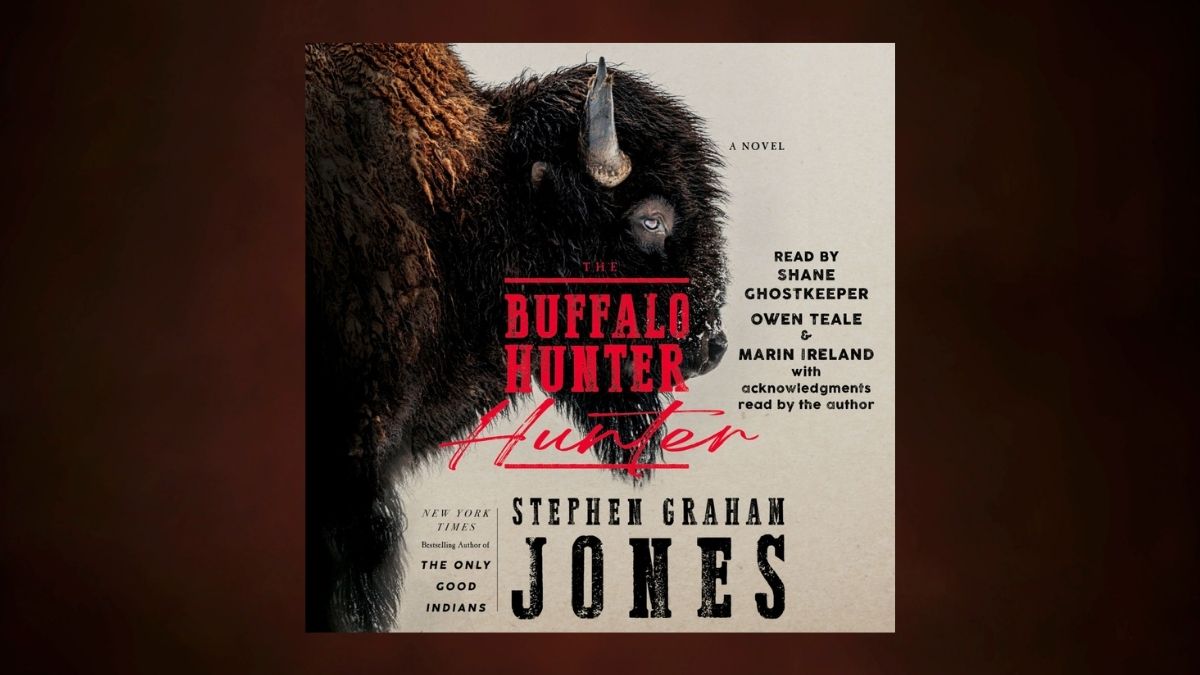
Stephen Graham Jones’s The Buffalo Hunter Hunter is a vampire novel that doesn’t behave like one.
It is horror, but also historical witness. It takes a familiar monster and makes it carry the weight of Indigenous survival and grief. The result is unsettling in the best way, and it lingers long after the final page.
A Found Diary That Opens the Past
The story begins in 2012 with a discovery that feels small until it isn’t. A century-old diary is found hidden inside the wall of a parsonage.
The diary was written in 1912 by Lutheran pastor Arthur Beaucarne, who recorded confessions from Good Stab, a Blackfeet man who has become something undead.
This frame matters because it turns reading into listening. The text positions you as the latest witness in a long chain of witnesses. You are not outside the story. You are responsible to it.
Three Timelines, One Reckoning
Jones uses a braided structure that keeps history from staying “back then.” The novel unfolds across three interwoven tracks:
- 1912: Beaucarne transcribes Good Stab’s confessions.
- Earlier history: the atrocities and losses that shape Good Stab’s transformation.
- 2012: the diary’s rediscovery, where past violence pushes into the present.
Each timeline reflects and sharpens the others. You feel the way old wounds echo forward, and how present-day readers inherit the work of facing them.
Good Stab: Undead as Evidence of Survival
Good Stab’s voice is the engine of the novel. He speaks about what was done to his people, what was taken from them, and what he has become because of it.
His vampirism is not a Gothic flourish. It is a condition born from historical violence.
He is not undead simply to frighten. He is undead because history tried to erase him, and failed.
Reimagining the Vampire Through an Indigenous Lens
Traditional vampire stories often center European fears: aristocratic predation, forbidden desire, contagion, or moral decay. Jones reshapes the myth by pulling it through a Blackfeet worldview.
What changes in Jones’s version
- Vampirism becomes endurance. Immortality stands for cultural memory that refuses to disappear.
- Hunger becomes moral tension. Good Stab doesn’t kill randomly. His thirst is aimed at those tied to genocide.
- The monster becomes a witness. He carries history in his body, not just in his mind.
Good Stab is both victim and avenger. The novel lives in that uneasy overlap.
The Buffalo Hunters and the True Horror
The title is a reversal. Buffalo hunters once slaughtered the herds knowing starvation would follow for Plains tribes. Now the “buffalo hunter” is hunted.
Jones roots the novel in the historical destruction of the buffalo, showing it as more than environmental ruin. It was a strategy of domination. For the Blackfeet and other Plains nations, buffalo were foundational:
- food and livelihood
- ceremony and spirituality
- social structure and identity
Erasing the herds meant erasing a way of life. Jones makes that devastation tangible through Good Stab’s memories and the slow violence of loss.
Horror That Refuses Easy Answers
The supernatural elements don’t soften history. They underline it. Through Good Stab’s vengeance, the novel raises hard questions and doesn’t rush to resolve them:
- What does justice mean when human systems never delivered it?
- Can vengeance ever heal cultural wounds?
- How do people today carry inherited guilt or inherited grief?
Instead of offering comfort, Jones lets the questions stay sharp. That is part of the book’s honesty.
Jones’s Craft: Atmosphere and Witnessing
Jones builds fear through patience. The pacing is a slow burn, heavy with dread and inevitability. When violence arrives, it feels like consequence rather than spectacle.
The diary form adds another layer. We read Good Stab through Beaucarne, an outsider shaped by faith, fear, and his own limits. That filter mirrors how real histories reach us:
- through partial records
- through power imbalance
- through silence and omission
The structure makes you notice who is speaking, who is recording, and who is being believed.
Reception and Reader Experience
Since its release, The Buffalo Hunter Hunter has been praised as a bold expansion of vampire fiction. Critics often highlight its emotional weight and cultural urgency. Still, the book isn’t built for everyone’s idea of horror pacing.
Some readers love the diary-driven atmosphere and layered timelines. Others find the deliberate ambiguity and slow build demanding. Both responses make sense. This novel isn’t chasing quick shocks. It’s asking you to stay present with discomfort.
Why the Novel Sticks
By the end, The Buffalo Hunter Hunter feels less like a twist on vampire lore and more like a refusal to forget. Good Stab is not a clean hero or a simple monster.
He is the shape of survival after catastrophe. Through him, Jones suggests that some histories don’t end politely. They keep walking. They keep feeding. They keep demanding witness.
If you want horror that blends supernatural dread with historical truth, this novel is worth your time.
Leave a Reply