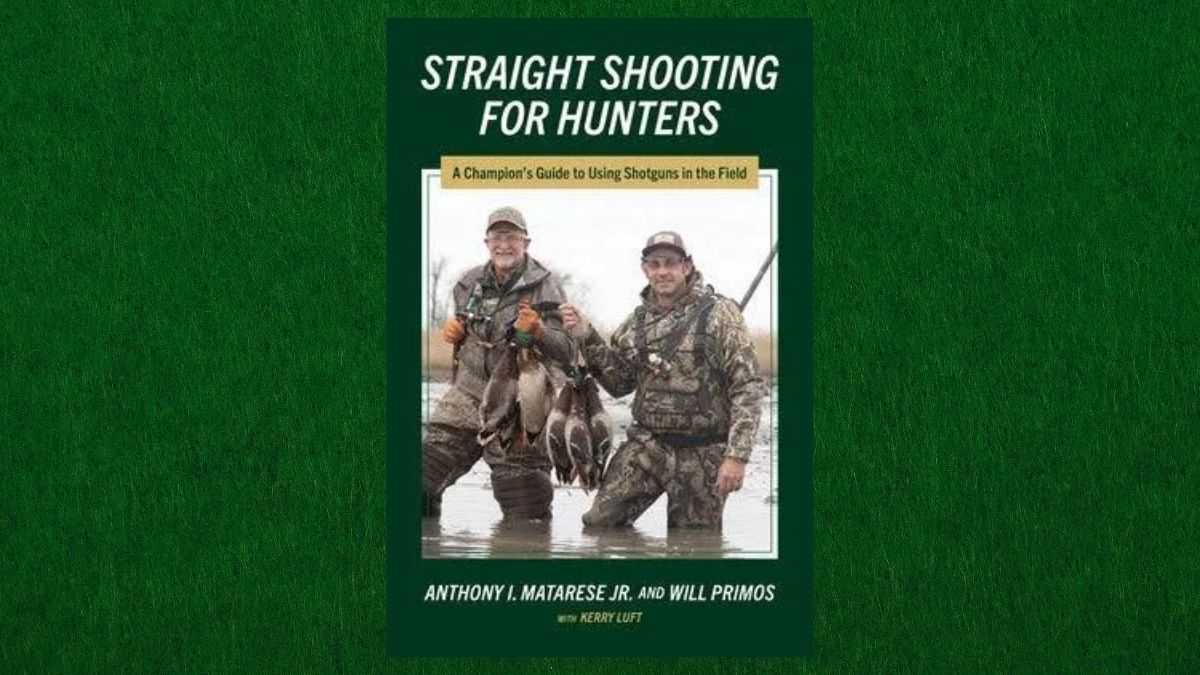
There’s a moment most hunters remember—the early days of learning a shotgun, when instincts often replaced technique and good shots felt more like luck than skill.
That early confusion is exactly why Straight Shooting for Hunters resonates so strongly. Co-authored by world champion shooter Anthony Matarese Jr., hunting icon Will Primos, and writer Kerry Luft, the book weaves expert-level knowledge with practical wisdom hunters can apply in real situations.
It reads less like a textbook and more like sitting around a camp table hearing three seasoned mentors break down the art of effective, ethical shotgunning.
Before Getting Into the Techniques
At its core, this guide bridges two worlds: the controlled precision of competition shooting and the unpredictable chaos of the field. That balance is what sets the tone for the rest of the book, making the upcoming technical sections easier to understand.
The Authors Behind the Expertise
Each contributor brings a distinct voice. Matarese channels championship discipline into hunting-specific instruction, showing readers how nuanced mechanics translate to birds that flush unexpectedly or cross in high wind.
Primos roots the lessons in decades of real-world scenarios—swamps, fields, flooded timber—offering the kind of instincts that can only be earned outdoors. Luft acts as the interpreter, taking advanced shooting concepts and reshaping them into plain, practical language.
Together, they transform complex technique into something deeply accessible.
Building a Strong Foundation
Before jumping into advanced drills, the book emphasizes why mastering fundamentals leads to consistent, ethical shooting.
Improving Shotgun Form in Real Hunting Conditions
Gun mount, stance, eye dominance—these topics might sound basic, but the authors show how even small flaws snowball into missed shots. They walk through how clothing layers, uneven ground, or surprise flushes change the way a shotgun comes to the shoulder.
Eye dominance gets special focus, with solutions that feel realistic rather than clinical. Trigger control is another standout section, introducing competition-level techniques that remain surprisingly practical in the field. Even seasoned hunters will likely recognize a few habits they’ve overlooked.
Practice Drills That Don’t Require Ammunition
One of the book’s strengths is how it encourages improvement without demanding constant range time. Mounting drills, balance exercises, and swing-path practice routines are laid out clearly, making daily training easy to adopt.
Selecting and Setting Up the Right Equipment
Equipment talk can sometimes feel overwhelming, but here it’s refreshingly grounded.
Shotgun Setup by Game Type
Rather than offering blanket statements, the authors explain why certain gauges, chokes, and loads work best for quail, waterfowl, turkeys, and more. They show how pattern density, shot material, and distance play into ethical decision-making. Practical adjustments for clothing thickness, weather, and terrain make the advice useful for hunters who shift between seasons.
There’s also a realistic discussion of shotgun actions—semi-auto, O/U, pump—and where each shines depending on the hunt.
Simple Modifications That Make a Difference
From recoil pads to extended chokes, the book outlines upgrades that genuinely improve performance without requiring custom guns or major expense.
Turning Technique Into Field Success
This is where the authors’ combined experience truly shines.
Reading Birds, Calculating Lead, and Managing Variables
The explanations of lead—so often one of the most confusing topics—stand out for their clarity. Instead of rigid formulas, the authors teach hunters how to build intuitive judgment. They cover flushing vs. crossing shots, wind influence, flock situations, and subtle flight cues that help predict when and where to mount the gun.
Multiple-bird situations, often chaotic even for experienced hunters, are broken down into safe and effective decision-making steps.
Field Tactics That Create Shot Opportunities
Positioning, terrain use, dog coordination, and weather adjustments each get thorough attention. Readers learn how small changes—like modifying walking angles in upland cover or shifting blind placement—can dramatically increase shot opportunities.
Ethics, Conservation, and the Hunter’s Legacy
This section feels especially meaningful. The authors stress that good shooting isn’t just about hitting more birds—it’s about hitting them cleanly. Effective range testing, recovery strategies, and responsible decision-making are presented as essential parts of the hunter’s role in conservation.
They also touch on passing traditions forward, offering guidance for mentoring new hunters in skills and ethics.
Training for Long-Term Improvement
From off-season routines to clay games that mimic real hunts, the training advice is actionable and realistic. The inclusion of mental preparation and smartphone video analysis adds a modern touch that many hunters will appreciate.
Final Thoughts
Straight Shooting for Hunters manages to be both technically rich and highly readable. Hunters looking to sharpen their skills, improve their ethical decision-making, or better understand their equipment will find tremendous value here—whether they’re new to the sport or seasoned enough to appreciate the finer details.
This guide is part of The Sportsman’s Guide collection. Readers interested in sharpening their field performance may want to explore other hunting books, gear, and accessories offered in the same category.
Leave a Reply